Remember the AI “point solution”? Just a few years ago, the conversation around Artificial Intelligence was dominated by single-purpose tools. We had brilliant “isolated” algorithms that could do one thing exceptionally well: analyze a single dataset, predict a single event, or write a single paragraph of text. These were powerful specialized apprentices, but they worked in complete isolation, rarely communicating with the other systems required to actually run a business.
In 2026, those isolated islands are vanishing. We have entered the era of Holistic AI Integration, a fundamental transformation where discrete AI components are no longer treated as standalone tools, but as interconnected, foundational elements of a single, unified business ecosystem. This is the difference between having twenty separate dashboards and having a single “Intelligent Operation” that automatically acts on data.
The Problem with the Siloed Approach
Historically, businesses have approached IT with a tool-based mindset. Need to track progress? Get project management software. Need to secure data? Install a firewall. Need to scale? hire a customer service chatbot. While this worked for analog tools, it creates a massive bottleneck for modern AI. An isolated AI chatbot in 2023 was impressive, but it couldn’t check inventory, update a calendar, or automatically initiate a dispatch. It still required a human to bridge the gap between the AI’s recommendation and the required action. This is the “Isolated AI” approach: a fast car that still needs a manual key to start.
Breaking Down Silos: What Holistic Integration Means
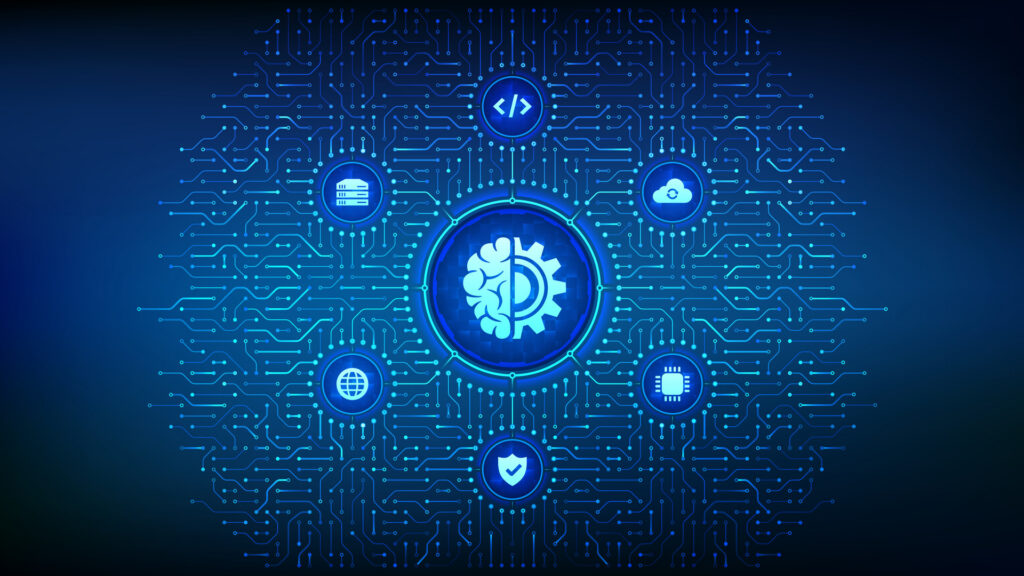
Holistic integration moves beyond mere compatibility. It represents a systematic architecture where every component—from customer data intake to final field dispatch—is an active participant in an automated intelligence loop. It involves connecting these pillars:
- Digital Transformation as the Foundation: Moving critical workflows to the cloud creates the data highway required for integration.
- Agentic Workflows (Intelligent Agents): We are shifting from manual code and repetitive tasks to intent-driven, autonomous AI Agents. Instead of just providing answers, these agents take preemptive, verifiable actions.
- Security (AI Governance): This cannot be an afterthought. Integrated AI requires robust AI Governance and Identity-First Security to ensure that your autonomous agents (your VOIP scheduler, your ambient progress tracker) are authenticated and authorized to act within strict policy limits. This is how you fight AI-powered phishing and “Deepfakes”: with a secured, authenticated system.
Integrated Operations in Action: A Voice Agent Case Study
The clearest illustration of this holistic shift is the emergence of integrated AI Voice Agents. These are not the disjointed “chatbots” of old. As detailed in the provided infographic, a modern, integrated voice agent isn’t just one algorithm; it is a meticulously designed ecosystem where multiple, sophisticated components (discrete “isolated” parts) work together flawlessly.
This entire flow—illustrated in the provided visual—is a single, automated, closed-loop operation. No step is isolated:
- Capturing the Voice Input: A detailed acoustic fingerprint is created, secured by Identity-First protocols, feeding directly into the next stage.
- ASR (Speech Recognition): The complex sound wave is transformed in real-time into structured text. This text doesn’t just wait on a monitor; it is instantly consumed by the NLP system.
- NLP (Language Processing): The intricate, interwoven server and gear cluster deciphers the intent of the text, moving beyond mere keywords to understand complexity and nuance, a core pillar of holistic transformation.
- Decision-Making & Task Execution (The “Brain”): This is the crucial leap from analysis to action. The sophisticated neural network brain evaluates the derived intent and makes a verifiable decision (The check or X), which directly triggers other systems. This is not just outputs; it’s operational logic. This brain acts on your automated VOIP and scheduling databases.
- Generating and Converting Response: The machine gear cluster (Response Generation) works in lock-step with the Text-to-Speech system, assembling and outputting a natural, authenticated response.
- Continuous Learning Loop (Feedback): This is where integration is truly holistic. The outcome of the entire process is captured in a detailed, dynamic learning loop. This data isn’t siloed; it is looped all the way back into the NLP stage, creating a system that learns from its own operation and improves every future interaction. This is “Ambient Progress Capture” at the systemic level.
Contrast this with the isolated version: A separate text generator, a separate speech app, and a manual feedback form that a human must review weeks later. Holistic integration is seamless, secure, and self-improving.
The End Result: Unlocking True Efficiency
Gaining true operational efficiency is the result of connecting these integrated pillars. While Isolated AI optimized individual tasks, Holistic Integration optimizes the entire operational ecosystem. This means that transformation simplifies the workflow logic, security prevents expensive disruptions (like Shadow AI leaks), and automation delivers a faster, more reliable experience for your team and your North Texas clients.
At Noble IT Services, we are building these custom business operations ecosystems. Are you ready to stop paying the “Inefficiency Tax” of Isolated AI and integrate your operations into a single, automated revenue engine? Contact us to schedule a strategic consultation and see how we can unify your technology into a durable, resilient business.