For the last three years, the world has been obsessed with “Generative AI.” We marveled at ChatGPT writing poetry, Midjourney creating art, and Gemini summarizing emails.
But if 2024 was the year of the Chatbot, 2026 is officially the year of the Actionbot.
At Noble IT, we are closely watching a massive shift in the underlying technology of Artificial Intelligence—a shift from “Large Language Models” (LLMs) to “Large Action Models” (LAMs).
Here is the tech breakdown of what is changing under the hood and why it matters for your business.
1. From “Predicting Words” to “Using Tools”
Traditional AI (like the early versions of ChatGPT) worked on a simple principle: Predict the next word in a sentence. It was a very fancy autocomplete. If you asked it to “Check my inventory,” it would hallucinate a polite response because it had no hands.
The 2026 Shift: The new wave of “Agentic AI” (built on architectures like Google’s Gemini 2.0 and OpenAI’s O-Series) has been given “Function Calling” capabilities.
This means the AI isn’t just generating text; it is generating code that triggers real-world actions.
-
- Old Way: You ask, “Book a meeting.” The AI says, “Sure, here is a template email you can send.”
-
- New Way: You ask, “Book a meeting.” The Agent checks your Google Calendar API, finds a free slot, invites the guest, and adds a Zoom link—all without you clicking a mouse.
2. The Rise of “System 2” Reasoning
Psychologists talk about “System 1” thinking (fast, instinctive) and “System 2” thinking (slow, deliberate logic).
Until recently, AI only had “System 1.” It blurted out the first answer it found. Now, we are seeing “Reasoning Engines.” When you give a complex command to a modern Agent, it doesn’t answer immediately. It pauses. It breaks the problem into steps.
-
- Step 1: Identify the user’s goal.
-
- Step 2: Check available data.
-
- Step 3: Formulate a plan.
-
- Step 4: Execute.
This “Chain of Thought” processing is why AI can now handle complex tasks like “Audit this tax return” rather than just “Write a haiku about taxes.”
3. On-Device Intelligence (The NPU)
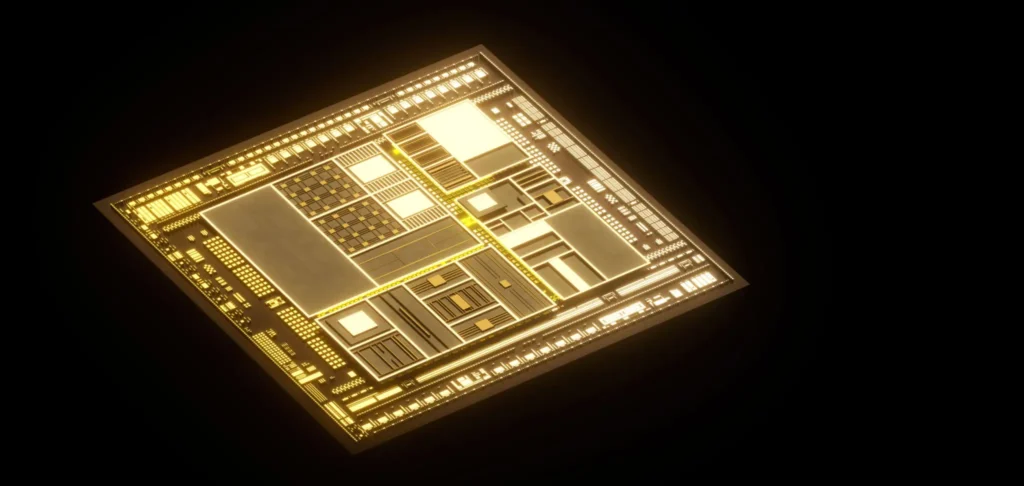
Perhaps the most exciting shift for privacy-conscious businesses (like our CPA and Medical clients) is that AI is leaving the cloud.
Your newest laptop likely has a CPU (Central Processing Unit) and a GPU (Graphics Processing Unit). But look closer at the spec sheet: it now has an NPU (Neural Processing Unit).
This dedicated chip allows powerful AI models to run locally on your laptop, disconnected from the internet. This is a game-changer for security. It means you can have an AI Agent analyze your confidential financial data without a single byte of information ever leaving your office.
Why We Are Betting on “Micro-Apps”
This technological shift is exactly why Noble IT is pivoting toward building Custom Micro-Apps.
In an “Agentic” world, you don’t need giant, bloated software suites with a thousand buttons. You need simple, clean interfaces that both Humans and AI Agents can interact with.
We are building the “Digital Nervous System” for companies in McKinney and Frisco—connecting your data to the new generation of AI tools that are ready to get to work.