For the past few years, the tech world has been captivated by the “generation” era of AI. We marvel at chatbots that can draft emails, summarize meetings, and generate code in seconds. But generative AI, for all its brilliance, is fundamentally passive—it waits for a prompt, gives an answer, and stops.
At GTC 2026, Nvidia CEO Jensen Huang signaled the end of this passive era. He introduced the industry to a new, aggressive, and highly deliberate piece of terminology: The Clawbot.
A chatbot waits to be spoken to. A clawbot reaches out and does the work.
While “clawbot” might sound like a sci-fi villain, it represents the single largest shift in enterprise computing today: the evolution from conversational AI to autonomous, agentic, and physical AI. Here is an in-depth look at what Nvidia’s OpenClaw framework, NemoClaw agents, and parallel physical AI projects like GR00T mean for the future of your IT infrastructure.
The Digital “Claw”: AI That Actually Clicks
Nvidia is known for defining the vocabulary of the tech market, shifting from dry terms like “servers” to cinematic phrases like “AI Factories” and “Digital Twins.” The “Clawbot” is their masterclass in branding autonomous AI agents.
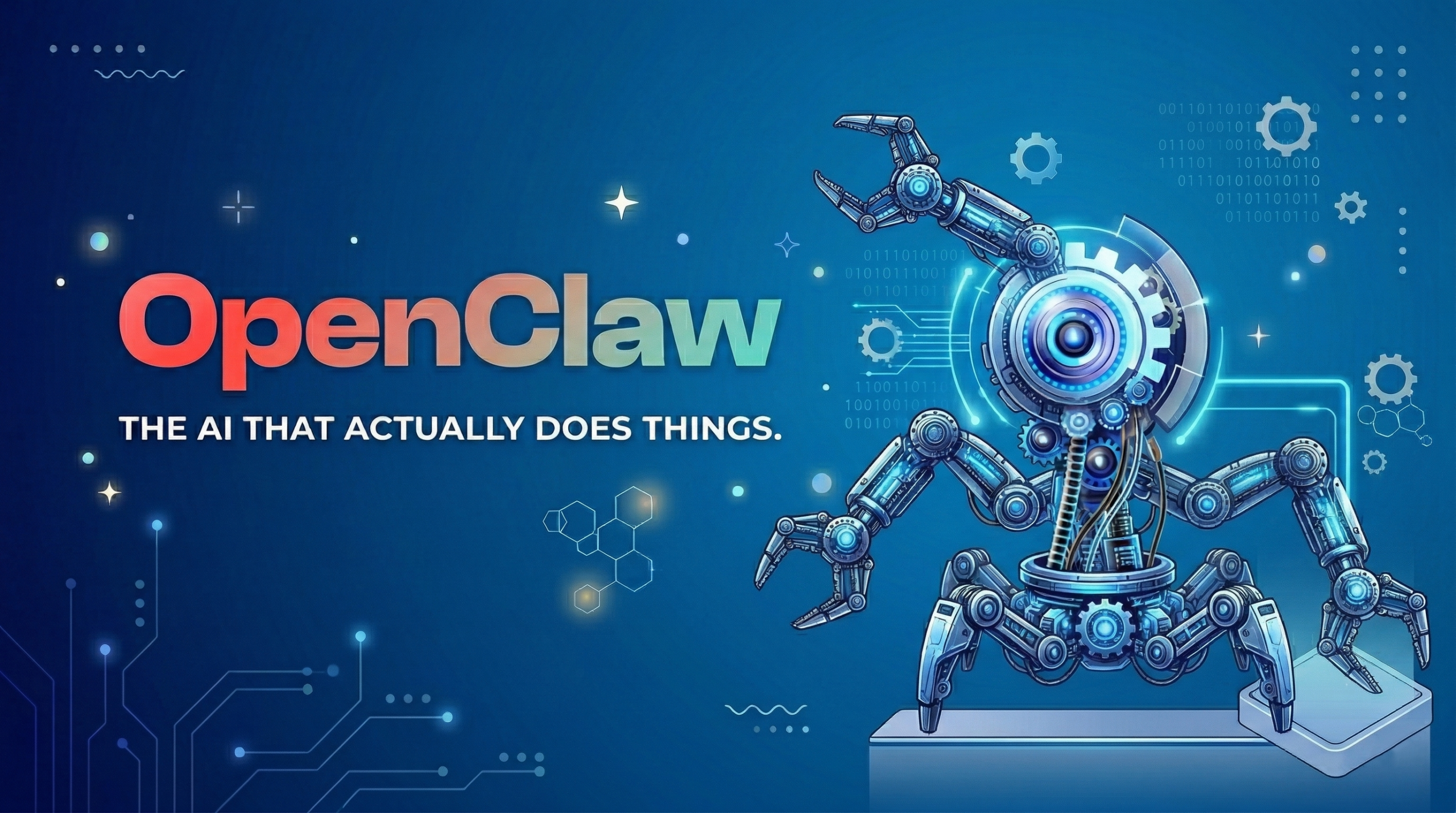
At the software level, Nvidia’s OpenClaw framework and NemoClaw software stack are designed to deploy self-evolving, autonomous AI agents that run continuously. Instead of just summarizing your inbox, a digital clawbot has the “hands” (API access and runtime permissions) to act. It can sort messages, draft replies, escalate priorities, query dashboards, interact with enterprise apps like SAP or Salesforce, and coordinate multi-step workflows.
Nvidia’s strategy here isn’t just about making a better assistant; it’s about treating AI as labor. If digital workers never clock out, they become a constant, always-on workload. Nvidia knows that fleets of these agents will require massive amounts of continuous inference, memory, and orchestration—driving unprecedented demand for their DGX supercomputers, RTX Pro workstations, and data center GPUs.
The Physical “Claw”: Project GR00T and Robotic Dexterity
Nvidia’s ambition doesn’t stop at digital software agents. They are aggressively pushing to become the “Android of robotics.” The physical manifestation of the clawbot narrative is happening right now in warehouses and factories, driven by Project GR00T and advanced robotic dexterity.
Until recently, industrial robots were rigid. You had to hard-code their exact movements. If a part on an assembly line was moved by a single inch, the robot would grasp at empty air.
Today, humanoid robots are being equipped with Vision-Language-Action (VLA) models like Nvidia’s GR00T N1.6 (boasting over 2.2 billion parameters). These are the “brains” of the physical clawbots. You can give a robot a natural language command—“Clean up the workbench and sort the bolts by size”—and the VLA model translates that language directly into immediate, dynamic physical action.
But a brain is useless without capable hands. That is why the robotics industry is pouring hundreds of millions into dexterous manipulation. Programs like the NSF-funded HAND (Human AugmentatioN via Dexterity) center are racing to replace crude, two-jaw grippers with multi-fingered, highly sensitive robotic hands. Powered by platforms like the NVIDIA Cosmos World Foundation Model—which allows robots to simulate environments and “think ahead” before making physical contact—these physical clawbots will soon be capable of handling fragile materials, performing complex caregiving tasks, and operating human-centric tools.
The Security Dilemma: Trusting the Claw
The ability to take action is what makes clawbots incredibly valuable—and incredibly dangerous. A chatbot hallucinating a fact is an annoyance. A clawbot hallucinating while it has access to your company’s CRM, financial databases, or physical manufacturing line is a catastrophe.
Because clawbots represent an active attack surface, Nvidia is surrounding this launch with a massive ecosystem of security partnerships. Integrating with Cisco, CrowdStrike, Microsoft Security, and Trend Micro, Nvidia is building isolated runtimes, policy controls, and “privacy routers” directly into the NemoClaw architecture.
For IT leaders, this changes the security conversation. You are no longer just securing code and human users; you must secure autonomous digital workers, ensuring their “claws” are strictly restricted to the data and applications they are authorized to touch.
The Bottom Line: Is it Just Hype?
As with any emerging tech cycle, there will be missteps. Some early clawbots will break, overpromise, or end up being little more than standard workflow automation masquerading as intelligence.
However, dismissing the clawbot as mere hype would be a massive strategic error. The transition from reasoning to action is underway. Major players like Microsoft (Copilot), Salesforce (Agentforce), and OpenAI are all racing toward the same goal: autonomous systems that execute multi-step tasks in both digital and physical spaces.
If your organization hasn’t started considering how to manage, secure, and deploy autonomous agents, now is the time. Chatbots were the opening act; Clawbots are the main event. And they are already reaching for the controls.